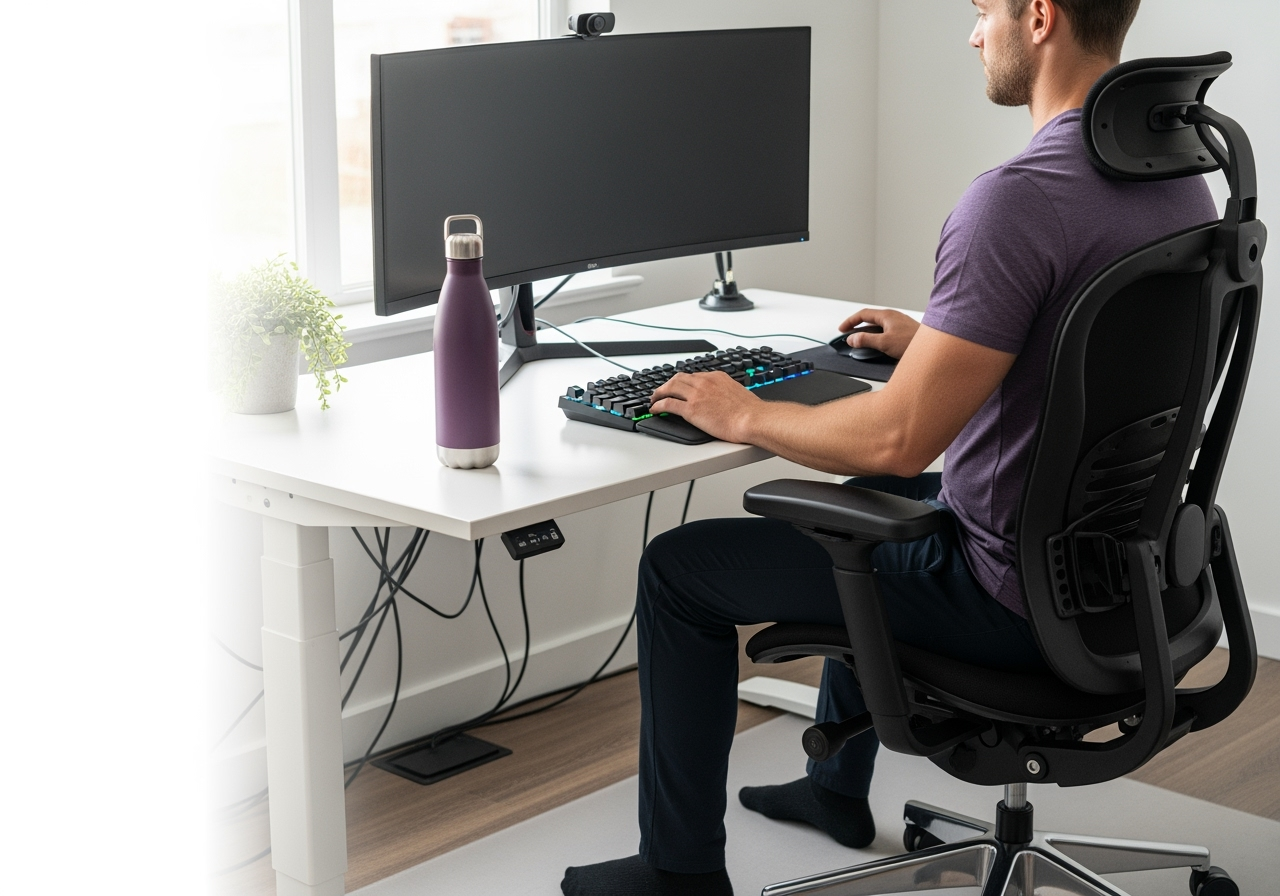
If you train hard on weekends but grind at a desk during the week, your workstation can either support recovery—or sabotage it. This step‑by‑step setup reduces neck, shoulder, and low‑back strain while keeping you ready for sport.
Low back/hips: Prolonged flexion = hip flexor tightness, inhibited glutes, achy lumbar. Key idea: Your “next posture is your best posture.” We aim for neutral setup + frequent, small position changes.
10‑minute workstation setup checklist
Chair setup
Seat height: Sit so knees and hips are level or hips slightly higher. Feet flat on floor.
Seat depth: 2–3 fingers between the seat edge and the back of your calf.
Lumbar support: Support the natural curve; if none, add a small cushion or rolled towel.
Armrests: Height so shoulders relax (not shrugged). Elbows near 90–110° and close to body. Common fix: If your feet don’t reach the floor, use a footrest or a firm box.
Monitor position
Height: Top of the screen at eye level (or 1–2 inches below if you wear progressive lenses).
Distance: About an arm’s length (50–70 cm). Move closer if you lean forward to read.
Centering: Align the primary monitor with your nose; dual monitors used equally should be centered; if one is primary, center that one and angle the secondary.
Keyboard and mouse
Placement: Close to the body so elbows stay by your sides; forearms parallel to floor.
Keyboard tilt: Flat or slightly negative tilt to avoid wrist extension.
Mouse: Same height/plane as keyboard. Keep wrist neutral—move from shoulder, not just the wrist. Consider a larger mouse if you death‑grip a tiny one.
Desk height
Ideal: Around elbow height when shoulders are relaxed. For most, 25–30 inches; adjust to you, not the spec.
Standing desk: Set the same elbow‑height rule. Keep screen height consistent with sitting.
Laptop users
Use a laptop stand to lift the screen to eye level + external keyboard/mouse. This is non‑negotiable for daily use.
Lighting and glare
Place monitor perpendicular to windows to reduce glare.
Use a task light to keep the screen dimmer than your paper/keyboard.
Cable and reach management
Keep daily‑use items within the forearm “easy reach” zone.
Move the phone/headset to the non‑mouse side to alternate load.
Micro‑breaks and mobility plan (2 minutes per hour)
Timing: 30–60 seconds every 30 minutes; 2 minutes every hour. Set a timer or use software nudges.
Movement snacks:
Chin nods + retractions x10 (small, gentle)
Shoulder blade slides: elbows at sides, squeeze down/back x10
Thoracic extension over chair back x5 breaths
Hip opener: stand, lunge stretch 30s/side
Calf raises x15 or brisk walk to water
Standing rotation drill for golfers/pickleball/hockey: hands across chest, slow trunk rotations x10 each way.
Common mistakes (and easy fixes)
Perching on front of chair → Slide back and use lumbar support.
Shrugged shoulders at the keyboard → Lower armrests/desk; bring keyboard closer.
Monitor too low → Stack books or use a riser; stop craning the neck.
Wrist resting on sharp desk edge → Add a soft desk mat; keep wrists neutral.
All‑day standing → Alternate: sit 30–45 min, stand 15–20 min; change positions often.
Footrest: A stable box works; adjustable footrests add comfort.
FAQ
Q: What is the correct monitor height?
A: Top of screen at eye level; arm’s length away; adjust for progressive lenses.
Q: Is a standing desk better?
A: It’s a change tool, not a cure. Alternate positions and keep elbows at desk height.
Q: What if my feet don’t touch the floor?
A: Use a footrest to keep knees/hips level and reduce low‑back strain.
Q: Do I need an expensive chair?
A: Adjustability matters most. Add a lumbar roll before upgrading.
When to get help If you’re dealing with recurring neck/shoulder headaches, numbness/tingling, or stubborn low‑back pain, a targeted assessment can identify mobility or motor‑control gaps your setup can’t fix alone.
Ready for a personalized ergonomic tune‑up?
Book an assessment with Nobility Chiropractic & Wellness in Smiths Falls. Online booking via Jane, or call/text 343.801.0094.
In today’s fast-paced and competitive business world, workplace productivity is paramount. Employers are constantly seeking ways to optimize efficiency and maximize output. Surprisingly, one often overlooked element that can significantly enhance workplace productivity is chiropractic care. Yes, you read that right! The remarkable connection between physical health and productivity is gaining recognition, and chiropractic care is emerging as a game-changer.
The Link Between Physical Health and Productivity
It’s no secret that employees’ productivity soars when they are physically healthy. Research has shown that employees prioritizing their health are more focused and experience fewer sick days. Regular chiropractic care can be crucial in promoting physical well-being and productivity.
As we spend long hours seated at our desks, poor posture silently takes its toll on our bodies. The resulting musculoskeletal imbalances can lead to discomfort and pain, ultimately impacting our work performance.
The Impact of Poor Posture
Poor posture affects more than just our physical health. It also significantly negatively affects our ability to concentrate and think clearly. When our bodies are misaligned, our brains become increasingly distracted by the discomfort and cannot fully focus on the task. By addressing poor posture through chiropractic care, employees can experience improved concentration and mental clarity, leading to enhanced productivity.
Chiropractic Adjustments for Pain Relief
Work-related pain is a common complaint among office workers. The passive nature of their jobs can cause muscle tension, headaches, and even chronic pain. Chiropractic adjustments, specifically tailored to address workplace injuries and strains, offer effective pain relief without relying solely on medication. By alleviating pain and discomfort, chiropractic care enables employees to stay focused and perform at their best.
Moreover, chiropractic care goes beyond pain relief and posture correction. It also contributes to the overall well-being of employees. Regular chiropractic adjustments help improve blood circulation, enhancing the delivery of oxygen and nutrients to the brain. This increased blood flow boosts cognitive function and promotes a sense of alertness and mental acuity.
In addition, chiropractic care can positively impact stress management. High levels of stress can hinder productivity and lead to burnout. Chiropractic adjustments help release tension in the body, reducing stress and promoting relaxation. By incorporating chiropractic care into their routine, employees can better manage stress, improving focus and productivity.
Benefits of Chiropractic Care for Office Workers
Now that we understand how chiropractic care can significantly improve workplace productivity, let’s explore some specific benefits it offers office workers.
First and foremost, chiropractic care helps alleviate work-related musculoskeletal issues. Whether it’s the dreaded “tech neck” from staring at screens or the stiffness caused by prolonged sitting, chiropractic adjustments can provide much-needed relief. By addressing these issues head-on, employees experience increased comfort and are better equipped to tackle their daily tasks confidently.
Furthermore, chiropractic care promotes overall well-being. Regular adjustments improve spinal health, enhance blood flow, and boost the body’s natural energy levels. This revitalization directly translates to increased motivation and efficiency in the workplace.
Chiropractic care also plays a crucial role in stress reduction for office workers. The physical demands of sitting at a desk for extended periods can lead to increased tension and stress in the body. Through spinal adjustments and targeted care, chiropractors can help release built-up tension, allowing employees to experience a sense of relaxation and mental clarity. This reduction in stress levels can profoundly impact overall job satisfaction and performance.
Ergonomic Tips to Complement Chiropractic Care
While chiropractic care alone can work wonders, office workers must also adopt ergonomic practices in their workplace. Ergonomics refers to the design of the workspace to optimize productivity and reduce the risk of musculoskeletal problems. Simple changes, such as adjusting the height of the desk and chair, using wrist supports, and taking regular stretch breaks, can greatly enhance the benefits of chiropractic care and further improve productivity.
Additionally, ergonomic tools such as standing desks or chairs can provide office workers with more flexibility and support throughout the day. These tools are designed to promote proper posture and reduce strain on the body, complementing the effects of chiropractic adjustments. By combining chiropractic care with ergonomic practices, employees can create a workspace that supports their physical well-being and enhances their overall productivity and job satisfaction.
The Role of Regular Chiropractic Visits in Preventing Injuries
Prevention is often better than a cure, and this is also true in the workplace. Regular chiropractic visits play a vital role in preventing workplace injuries. By addressing minor misalignments and imbalances before they become major issues, employees can avoid potential injuries caused by repetitive strain or poor ergonomics.
By taking proactive steps to maintain physical health, employees are better prepared to tackle their workloads and avoid unnecessary time off due to injury.
Furthermore, regular chiropractic care can also improve overall employee morale and productivity. When employees feel physically well and free from discomfort, they are more likely to be engaged and focused on their tasks. This can lead to a more positive work environment and increased efficiency within the workplace. Employers who prioritize the health and well-being of their employees through chiropractic care may also see a decrease in employee turnover rates, as workers feel valued and supported in their overall health.
It’s important to note that chiropractic care is not just about addressing existing issues but also about promoting long-term wellness. Through regular adjustments and personalized treatment plans, chiropractors can help employees maintain optimal spinal health, improve posture, and enhance overall physical function.
This proactive approach to healthcare can result in fewer sick days taken by employees, ultimately benefiting the individual and the organization.
FAQs About Chiropractic Care and Enhancing Workplace Productivity
Before we conclude, let’s address some frequently asked questions about chiropractic care and its impact on workplace productivity.
Is chiropractic care suitable for everyone?
Yes, chiropractic care is suitable for people of all ages and professions. Whether you’re an office worker, athlete, or retiree, chiropractic care can benefit you and enhance your productivity.
How often should I visit a chiropractor to improve productivity?
The frequency of chiropractic visits depends on individual needs and goals. While some employees may benefit from monthly visits, others with specific conditions may require more regular appointments. Consult with a qualified chiropractor to determine the best treatment plan for you.
Can chiropractic care help with stress management?
Absolutely! Chiropractic adjustments help reduce stress by releasing tension in the body and promoting relaxation. By alleviating physical stress, chiropractic care can positively impact mental well-being and stress management.
Every employer strives to enhance workplace productivity. By recognizing the connection between physical health and productivity, employers can provide their workforce with the tools and resources they need to excel. Incorporating chiropractic care into the workplace wellness program can yield remarkable benefits, from improved focus and pain relief to increased motivation and overall well-being.
Now, let’s delve deeper into the specific ways chiropractic care can enhance workplace productivity:
1. Improved Posture: Many office workers spend long hours sitting at their desks, leading to poor posture and musculoskeletal imbalances. Chiropractic care can help correct these imbalances, improve posture, and reduce the risk of chronic pain and injuries. With proper alignment, employees can maintain a more comfortable and ergonomic position, leading to increased productivity.
2. Enhanced Energy Levels: Chiropractic adjustments relieve physical tension and stimulate the nervous system, promoting better energy flow throughout the body. By improving energy levels and tackling tasks with vigor and efficiency, employees can stay focused and alert.
3. Stress Reduction: Workplace stress can significantly impact productivity. Chiropractic care helps reduce stress by releasing endorphins, the body’s natural “feel-good” hormones. Additionally, chiropractors often incorporate relaxation techniques and therapeutic exercises into their treatment plans, further reducing stress.
4. Prevention of Work-Related Injuries: Repetitive tasks, prolonged sitting, and heavy lifting are common causes of workplace injuries. Regular chiropractic care can help prevent these injuries by improving joint mobility, strengthening muscles, and promoting proper body mechanics. By reducing the risk of work-related injuries, employers can maintain a healthier workforce and minimize productivity disruptions.
Investing in your employees’ health through chiropractic care can yield long-term benefits for both the individuals and the organization. Employers prioritize their well-being by creating a positive work environment that fosters productivity, creativity, and overall job satisfaction.
So, take the first step towards enhancing workplace productivity by incorporating chiropractic care into your company’s wellness program today!
The study found that patients who used a maintenance style of care experienced almost 2 full weeks less with back pain per year than those using a symptom-based program of care, with an average difference of less than 2 more appointments per year for those utilizing a maintenance style of care.
The mechanisms behind maintenance care are thought to be that maintenance (or asymptomatic) care can improve movement and neuromuscular function. Additionally, it may address psychosocial issues – meaning people are less worried about falling back into pain and are less cautious about their back in their activities of daily living.
This means that in treating chronic low back pain, maintenance care can be a good option for preventing back pain as well as treating it when it does pop up.
Reducing Office Temperatures to Improve Cognitive Performance
It’s been a hot summer, but keeping cool at the office can be an important part of helping your employees keep their cool, and their performance.
A 2014 study showed that high temperatures in the workplace have a negative impact on attention span and reaction time. A 2018 Harvard study amongst students had similar findings, students who had access to air conditioning scored better on tests measuring selective attention, processing speed, cognitive speed, and working memory. The AC group were exposed to temperatures 4.9 degrees celsius lower than the group without AC (21.4 degrees vs 26.3 degrees).
This means that by keeping the office a few degrees cooler you’ll be getting better performance from your employees. Helping those employees that are present be more productive can be a big deal in a business, especially during the summer when many employees are away on vacation.
While reducing temperatures can be one quick, simple way to help reduce workforce inefficiencies, there is always more that can be done! For help with Workforce Optimization in your office, please fill out our corporate contact form.
A company’s employees are its largest investment. If it makes sense to have IT specialists to ensure that computer systems are running optimally, bookkeepers and accountants to make sure finances are in order, and lawyers to ensure legal ventures go as intended, why wouldn’t your company want to optimize its workforce as well?
It’s become less of a secret that a happy, healthy workforce is a more efficient, more effective workforce. One of the best ways to achieve a happy, healthy workforce is a corporate wellness program with an on-site chiropractic clinic – this isn’t just an investment in your employees, but also your company – often with a larger return than the investment.
Here are the top 10 Benefits to On-site Chiropractic Care:
Fewer / No barriers to entry to care
Reduced time employees spent away from work
Fewer sick days
Reduced Workplace Accidents
Reduction in WSIB payments
Increased employee satisfaction
Reduced Employee Turnover
Reduced Retraining costs
Increased productivity at work (reduced presenteeism)